lunes, 14 de octubre de 2013

Insight: The Age of Jackson (Chapter 4)

The election of 1824 was between four candidates: John Quincy Adams, John C. Calhoun, Henry Clay, and Andrew Jackson. The winner ended up being Jackson, his reign would bring upon a list of events, the majority far more dull and extremist than positive.
            Adams and Clay argued that government power should be used to promote economic development. Out of all four candidates, Jackson was the wild card – he was a wealthy plantation owner, and his fame rested on his military exploits like his victory at New Orleans. Yet, the House of Representatives had to choose a president from among the top go getters, which left Jackson and Adams as main rivals. Adams won for a majority of votes. However, a large part of the American population believed this had been won in a corrupt manner and Jackson planned to win on the next election.
            The election of 1828 was between the National Republicans (Adams and Clay) and the Jacksonian Republicans (Andrew Jackson) – their faceoff was called the second American party system. A faceoff won by Andrew Jackson.
            Andrew Jackson defended the spoil system, which was based on the belief that any intelligent person could perform the duties required in any government position – which made it fair for acquaintances of Jackson to take on these positions based solely on the fact that he knew them. And Jackson also defended the fact that economic issues should not be a priority for the government. He had a deep hatred towards banks, and decided to close the National Bank. Even when the congress passed a motion to avoid this from occurring, Jackson vetoed the decision and continued with its closure.
            The nullification crisis was an event that was managed during Jackson’s presidency. Here, there was a conflict due to tariffs – manufacturers in the South were not in favor of the high tax import in order to encourage manufacturing within the United States, for this mostly favored northerners in profit. Jackson’s solution was the Force Bill – which compelled the state of South Carolina to collect tariff act duties or else troops would be sent. However, Henry Clay opted for a compromise the annulled the Nullification Act and the Force Bill.
            Jackson also used his power to relocate the position of a large number of Native American tribes – he had a prejudice towards them and believed that they would prevent white people from moving west and opening up land for cotton production. They were forced to march west in what was called the Trail of Tears, in which one of every four Cherokees died due to the voyage’s conditions. Furthermore, the money promised to the Cherokees for relocating was short, instead of being given nine million, they were giving six.

            After two terms, Jackson left office. Behind him he left a war on banks, the trail of tears, evidence of a nullification conflict, and his belief upon a spoil system. Certainly a memorable president, whether for good or bad, is entirely subjective.

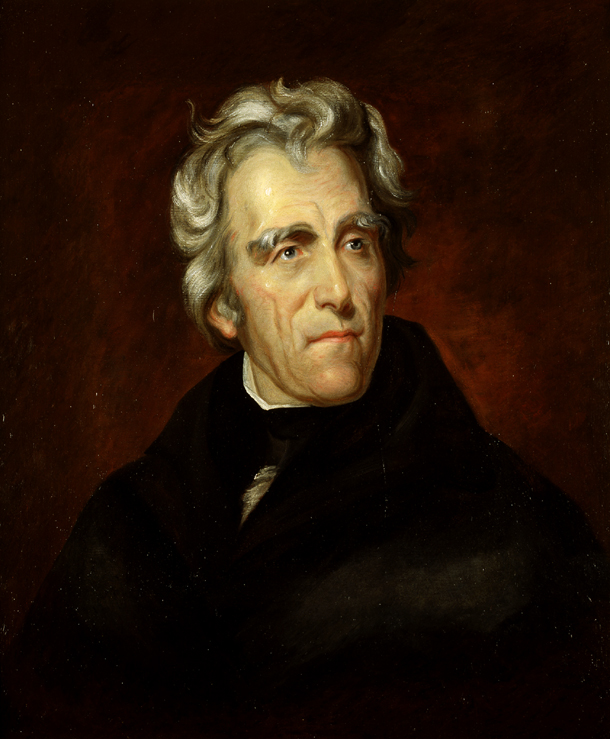
An image of Andrew Jackson 

Insight: Sectional Divisions Arise (Chapter 4)

            A nation will grow to a point in which sections start to become noticeable. Sections being defined as regions distinguished from one another by economic and cultural differences – in America, these were the North and the South. The north was made of the Northeast and the Old Northwest, while the South had no inner divisions.
            The Old Northwest was very large on farming, mainly crops and animals and their byproducts – however, they also created products such as whiskey.  The market for these products expanded thanks to river transportation to New Orleans and the Caribbean and the Eastern United States, and grew even more when canals were created. In the Northeast people were divided between those who still lived on farms and those who had gone to seek a job. This included women, who usually worked on windmills for they could be persuaded to work for half of the pay that a man would usually receive – a chauvinistic deal that they ignored happily, for they were earning their own money before being wed.
 Cities in the Northeast and Northwest developed due to the desire for jobs, a lot of migration took place. These cities, due to overcrowding, were lacking in sanitation and life conditions. Furthermore, those who did find jobs clashed with the owners of factories, for capitalism overshadowed the workers’ rights – leading to strikes and revolts.
The South’s primary products were cotton, tobacco, sugar, rice, and slaves. They did not develop as many towns and industries as the Northern colonies did, the region remained one of farms and open rural areas. They did have a small number of cities, however, which were rather large as the northern cities.
The slavery system supplied the labor for most of the crops in the South. Most of the enslaved African Americans lived on the plantations they worked on. Life for them was harsh, treatment was unfair – women had to withstand rape, abuse, taking care of their children, and giving birth; all while attempting to please their owners. Slavery was based on economics, owners exploited slaves to get work done, it was property that performed labor. Sometimes slaves would rebel, but most resistance consisted of small rebellions in daily routines. This slave system is a major separation between the North and the South.

            The sectional division between the North and the South and whatever sections existed between them is still relevant today. For it set the pace of development in which they would be stuck in, results of which are visible in present terms.

Slavers were an economic acquisition for land/plantation owners. 


Insight: Changing Households and New Markets (Chapter 4)

            When a population grows, when a nation grows, there are bound to be changes in the market and its goods. Rather than trading, exchanging goods, people now used cash and credit to obtain their resources – this is called the Market Revolution; introducing entrepreneurs, banks, and knowledge on buying.
            Samuel Slater was one of the creators and definers of what an entrepreneur was to be. He took advantage of the potential of a young, growing nation – the United States was producing more and more cotton to meet the needs of the growing population, and he brought English information on cotton mills and textile factories to create a fortune. For an entrepreneur is one who takes on business risks for the sake of profit, and this individual flourishes in capitalism – which is manufacturing controlled by private corporations and by individuals competing for profit.
            The household economy had ruled previously, in which people’s business was simply based on keeping their households running, it was very individualistic. They didn’t care for wealth, just living comfortably and on their own produce. Work was not a commodity, something to be bought and sold. As time passed, families produced fewer things they needed and instead bought them from stores or other people - this lead to centralizing manufacturing, which increased production.
            The Market Revolution also brought by the importance of banks, for these provided the credit and cash necessary for entrepreneurs to buy land or invest. They first appeared during the 1780’s, and by the 1830’s hundreds of them were placed. They were often started by groups of private investors, who unknowingly fueled the development of American economy. They allowed the loans to buy millions of acres of federal land in the West and other money-making schemes. They caused economic booms, but also, due to their way of acting together, severe depressions.

            Thanks to the Market Revolution: middle-class Americans were cluttered with purchased items, banks consolidated themselves as some of the most powerful and important institutions in society, work became a commodity, and work was centralized. All which, together, allowed for the American economy to flourish and expand.

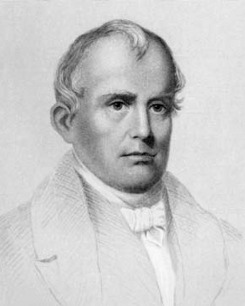
Samuel Slater: one of the very first entrepreneurs. 

Insight: Life in the New Nation (Chapter 4)

            The political aspect of the building of a new nation is important, but often overshadows the building of the mundane lifestyle of said state, which happens to be just as eventful and relevant as the official actions of the nation. The Trans-Appalachian settlement, the War of 1812, the Missouri Compromise, new technology, and the democratization of religion are some of the happenings during this period’s citizen livelihood.
            The reason why the population of the United States grew is the migration of American citizens to Ohio, Mississippi, Tennessee, and Cumberland River Valleys. This created an increase of population; from 2.7 million to 12 million in only fifty years – the nation was slowly growing, slowly making a bigger name and relevance for themselves. This expansion wasn’t favoring some, though, for the Land Ordinance of 1785 allowed sale of Native American land northwest of the Ohio River, otherwise called the Northwest Territory.
            This created friction between the Native Americans and the centralized government, creating repercussions such as the war of 1812 and resistance. The war of 1812 was triggered by interference of American shipping by British navy and also the support of the British towards the Native Americans. This war included battles such as the Battle of Thames or the Battle of Horseshoe – the two battles that ended the Native American resistance to American expansion to their lands.  
            Slavery was another aspect of their normalcy that became a discussion. The black code kept African Americans under the authority of white Americans even if slavery was illegal. Americans in the early republic agreed that slavery was legal south of the Ohio River and illegal north of it. There was a debate about this, however, for Missouri didn’t lie particularly north or south of said boundary, a debate that led to the Missouri Compromise. In which slavery would be permitted in Missouri, and Maine was carved out of Missouri which was before northern Missouri – and, in Maine, slavery was illegal.
            Technology arrived with the industrial revolution. Amazing improvements such as steam power, canals, and communications such as post offices created a massive improvement in their lifestyles. Not only was there an industrial awakening, but a Second Great awakening – an awakening of evangelization. This movement stressed preaching and predicted a better after life if they were to follow Christ. This movement aided in a sense of community and inclusion of women roles.

            As the laws and politics moved, so did the people. And, as the repercussions of all these events prove, the government depended on the people’s actions as much as the people depended on the government for changes to take place. 
A representation of the Missouri Compromise

domingo, 29 de septiembre de 2013

Constitutional Convention (Chapter 3)

Experiencing scenarios for the first time are, by nature, a trial and error type of subject. If you fail or find yourself in a losing position, more often than not, it will be perceived as a learning experience and enhance future situations similar to it. However, there are other topics, other places in which failure is too detrimental to be an option. The creation of the constitution was exactly this for the American delegates in 1787. The constitutional convention was a mission to rescue and hopefully edify the government, thought by them to be failing, as effectively as it was possible. And, as obvious as circumstances like this may indicate, the journey to the constitution was not an easy one. The convention was divided, congresses had to be created, federalists and anti-federalists’ conflict became a large issue; making delegates skeptical about approving the ideas for their new government. But ultimately, convinced enough, and created the pathway to a new nation.
A crucial individual to this period, famously known as the Father of the Constitution is James Madison. Madison believed in the cynic nature of humans, yet he was hopeful in the purpose and need for a stable government. He assisted every meeting the convention held- constantly and very vocally expressing his ideas, thoughts, and critique. Him and fellow thinkers brought upon the Virginia Plan.
As nearly any topic of interest in the world, the convention became divided. The biggest division being that between the supporters of the Virginia Plan and the supporters of the New Jersey Plan. The Virginia Plan called for the creation of a bicameral legislature, representatives in proportion to the number of citizens in the states, executive and judicial branches, and government’s right to tax and veto – all of these majorly favoring larger states. This led the smaller sized states to propose the alternative, the New Jersey Plan. This plan would give congress the power to tax, the creation of executive and judicial branches, and equal number of representatives, and a unicameral congress. Clearly, their differences were concrete – which terminated in the Great Compromise. A compromise between the two plans that consisted of two houses that made up a legislative branch – one that had equal number of representatives per state (House of Representatives) and the other that based the number of representatives off they population number (Senate). The compromise also addressed slave involvement as somewhat relevant in the Three-Fifths Compromise.
It was then settled that the constitution called for a separation of powers, which led to the system of checks and balances. The system allowed for a government that both preserved and limited popular sovereignty. The legislative, judicial, and executive branches sustained and controlled each other. They went further and created the electoral college - a meeting of electors in which a vote would be made to decide who the president would be – settling democracy even more.
The constitution had both supporters and opponents. The supporters went by the name of federalists, while their contrasts were the anti-federalists. The leaders of the federalists included Washington and Hamilton. The federalists believed that the federal government would work as a government by the people and for the people – one that was strong and energetic as the citizens required. The anti-federalists were against the creation of a government, for they considered this authority a copy of the monarchy they had to endure before their independence.
The tedious job of perfecting and creating a congress to rule a new nation and its people was not something that took a quick instant. The convention was long, it had its various arguments on different areas of the laws and regulations that were to put in. From the different suggested plans to the federalists and anti-federalists, creating the constitution was a challenge. A challenge that was finally worth it and appropriate for the United States.
http://upload.wikimedia.org/wikipedia/commons/1/1d/James_Madison.jpg                                  
James Madison, the father of the constitution.


martes, 17 de septiembre de 2013

American Revolution (Chapter 2)

The American Revolution
By: Sachi Kameishi
           
Independence, freedom, and rights – all privileges, for lack of a better word, that every human being should be able to own. Sounds like a rather blatantly  obvious statement, doesn’t it? At least in our modern world, a lack of independence is indicative of a lack of justice and morality and ever present bigotry. In the past, colonialism could very much be synonymous with this. Some were oblivious to this, due to the cynical nature of one being, in this case nation, superior to another. However, oppressed voices never quite fall in invisibility. The American Revolution and the War for Independence are archetypes of this fact. Fueled by sundry causes against the British, the colonialists lashed out and began their historic fight for freedom. Once free, however, their new republic, their new states, how to guide them – would prove an even bigger task than that of gaining their independence.
            The thirteen British colonies of America were subject to the “Mother country’s” every command. As a British colony these all received protection from the crown, as seen in the 7 Years War. However, this was massively overshadowed by the preposterous British economic and political abuse endured by the states. Examples of Acts and Laws passed by the British King George III that stirred the people in a foreplay manner for the upcoming revolution are the following: The Stamp Act, the Quartering Act, the Townshend Duties, the Tea Act, and the Port Bill. All of these including heavy taxation and patronizing towards the colonies. These encouraged a sense of unity against the British rule, the spread of democratic ideas, rebellion and congresses, held to discuss options; and the most crucial patriotic congress, being the Continental Congress, lead to the zenith of actions taken to become separated from the crown: the Declaration of Independence written by Thomas Jefferson, who brilliantly connected their need for freedom with the basic, innate rights of man. July 4th, all 13 colonies accepted this document’s validity and officially became the United States of America in their own eyes, for it still had to be won.
            The War for Independence holds an amount of characteristics that make it very relevant. There’s the fact that it took eight violent years to cut ties with the British, which makes it the second longest war in the history of the United States. As well as the fact that the population in the colonies were very much divided in who to support – estimated that one third were Patriots, one third were Loyalists, and one third were neither. The Patriots also searched for military support overseas from nations who had Britain as a common enemy – France and Germany. Individuals such as French officer Marquis de Lafayette, Prussian officer Baron Von Steuben and the armies of thousands of men they carried were crucial for the States’ troops’ organization, training, and ultimately, their victory.
            Once becoming the United States officially, government was something they were yet to settle. In fact, back then, they believed that the nation as a whole was less important than its thirteen parts. It was not a nation as much as it was a confederation, or an alliance of states. Moving quickly to create organization in the colonies, the Continental Congress created a set of laws called the Articles of Confederation. These articles combined the functions of a legislative and executive branch, for they passed laws and made sure to keep them steady by enforcing them. However and naturally given the context of their history, problems arose with these articles. Some of these being: regardless of the state’s size they only had one vote, the congress was powerless to impose taxes or duties, no separate executive to enforce acts of congress, no national court system to interpret laws, and amendment only with consent of all the states. Furthermore, the representatives served in a unicameral legislature – in which there is only one house or group of representatives. Giving no balance to the power as there would in a bicameral legislature. This created tension between Nationalists and those in favor of the articles, for there was no real way to fathom a free nation with a general, central power.
            Achieving a sovereign, independent nation was something that was probably not even in the range of possibilities of most then-Americans. However, it took a few events to trigger that nationalism, that desire for change and recognition of what they all knew they deserved. Through physical and mental strive and motivation, they made it. And once having it, they had to ponder upon the fact that they had to find a way to be united – to survive on their own. This, as well, brought upon conflict, conflict that took time to be resolved. However, their journey to becoming one of the most powerful nations in the world had commenced, but was still underway.
http://www.founding.com/repository/imgLib/20071025_JohnAdams.jpg

John Adams, one of the leaders of the Revolution. 

domingo, 25 de agosto de 2013

The Aftermath of the Colonization (Chapter 1)

            The European colonization of America was, and still is, one of the most relevant and condition-altering events. However, most focus on the aftermath of the colonizers’ arrival; not enough on the situation of the societies involved previous to it or the early settlement days. By neglecting this, valuable information and events are ignored as well. For prior to the colonies, the American, African, and European worlds were doing rather well and striving within each of their own environments. History then proceeds to their colliding, then to colonization, and then a series of events that served as obstacles to the European’s arrival and settling.
            Commencing this event’s history, there are those who were living in America. As vast as the list of Native American societies is, it may be surprising to know that these all share similar core values and fundamental behavior. Some of these characteristics involved the following: social needs fulfilled through family, extended kinship networks, fate decided by the doing (or not doing) of traditional rituals, and the belief that people were entitled to use land but never to own it. Native Americans also understood the benefit of trade, not only referring to the direct gain of product, but also the underlying present of hospitality and friendliness between different groups.
            Next, of course, is the European society. The European nations were organized in a system of duties and exchanges based on land, war, and tradition. In other words, feudalism was the basis for their society. The success behind feudalism also lies on the support it received from religion, which was mainly Christian at the time. Religion, in fact, also stands behind the fact that Europeans were so very obsessed with exotic items and produce; after the Europeans involved with the Crusades brought home Asian products, the European demand for these grew rapidly. This led to the creation of jobs such as merchants and craftspeople – however, unlike Native Americans; trade for Europeans was nothing more than an exchange, not a tie to social obligations to others. This fascination and desire for Asian produce led to the Age of Discovery, whose main purpose was to find a faster route to the Asian territory. Instead, America was discovered by them.
            And finally, the African Kingdoms. In Africa, in the north of the Congo River, was a long swath called Guinea – this was the center of all trade between Europeans and Africans. In Guinea, there was a lineage that was the ruling class. Most societies were made up of people who lived in towns and supported themselves primarily through farming. Again, most people in Guinea belonged to the same lineage. However, the groups in Guinea varied their religious beliefs – yet they all generally coincided on the existence of one Supreme being and other, lesser powerful, deities. Also, they believed in the existence of spirits before and after the decease of a person. And then there was the Empire of Songhai, one of the largest at the time situated in the Sahara. Traders could find gold and ivory from the forest kingdoms, also salt, cloth, weapons, horses, and books. And another good Europeans collected from Africa were human slaves, however this type of slavery was far more humane than the one practiced in years to come, in fact, some slaves saw it as a productive opportunity.
            As said before the collision of these cultures increased the desire for trade and faster ways for their transfer to Europe. When America was find looking for one of these new, more efficient pathways, Europeans decided to commence colonies and send settlements to these areas. However, things were not going to go smoothly. The Spanish, for example, found resistance from New Mexican Native Americans in the Revolt of 1680, which was won by the Native Americans – however, the Spanish returned. Yet, not all was in vain, for the return of the Spanish was established on a commitment that favored both the Spanish and the Pueblo inhabitants equally. Another resistance the European settlers confronted was the Native American community in Chesapaeke Bay, which also ended in a compromise between the two sides.
            These colonies also witnessed the beginning of Tobacco plantations and colonies placed in Virginia to work the fields – of course, those who worked the fields were the slaves. Slaves first arrived at these colonies during the year 1907. Also, the presence of Puritans and their conflict with King Phillip was quite a rumble – for the Puritans were making the land of America far too different to what Phillip wanted – very negatively so. SO, Phillip rallied up Native Americans to fight against the Puritans and protect that land. However, after plenty of casualties and historic bloodshed, the Puritans won. Which is also connected with religious conflict between the colonies.
http://t2.gstatic.com/images?q=tbn:ANd9GcShcPelLAzKVFMtejQO1vj8o8HDXXBiRkQZy7pLv_t9_JaueXx9VQThe three societies described had a role in the colonization of America and its success. However, the results and events that followed it did not have such a smooth and well-constructed nature. Events such as slavery, conflicting settlements with natives, and settlements versus England prove it so. Yet, without them, there wouldn’t be half as much history as there is.
The Revolt of 1860